

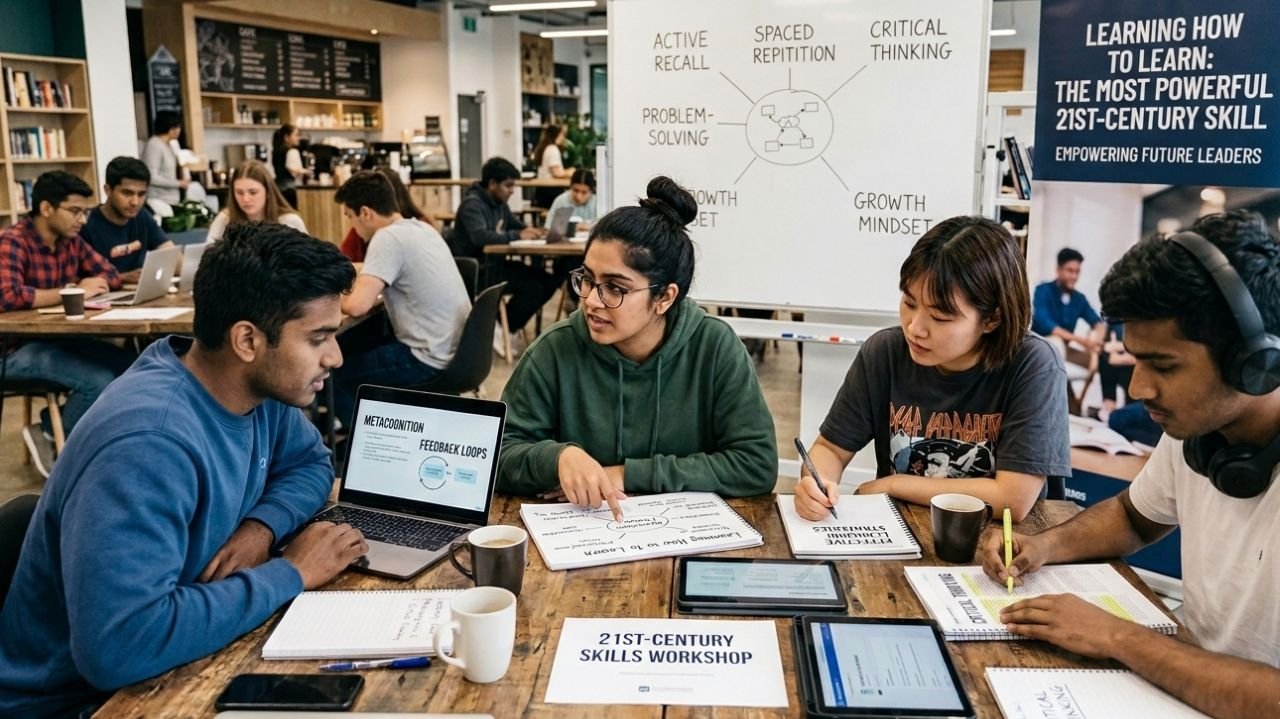
Adaptability has become more valuable than static knowledge in a world where industries change more quickly than textbooks can update. Today, learning how to learn is more powerful than simply acquiring knowledge. How well people adapt to changing industries, technological advancements, and unforeseen obstacles is determined by this one skill.
Organizations like the Digital Empowerment & Training Program (DETP) concentrate on developing flexible learners as opportunities are redefined by automation, AI in the workplace, and international competition. DETP equips professionals and students for the future of work with competence and confidence through industry alignment, practical exposure, and digital empowerment
What Does Learning How to Learn Mean?
Fundamentally, learning how to learn entails knowing how to take in, remember, and use information. It entails creating tactics that support you:
- Quickly pick up new ideas
- Adjust to various situations
- Apply your abilities in real-world scenarios
- Continue to increase your knowledge
You become an expert at the learning process itself rather than subject memorization.
Why Learning Agility Defines the Future of Work
Automation, innovation, and rapid digital transformation will shape the nature of employment in the future. Job roles are continuously being changed, and traditional career routes are changing.
AI and Employment Trends
It’s common to misunderstand the connection between AI and employment. AI increases the need for new talents even as it automates routine work. Professionals must integrate technical knowledge with creativity, ethics, and critical thinking as AI becomes more prevalent in the workplace.
While individuals who are resistant to change run the risk of falling behind, those who can pick up new systems fast stay relevant.
Career Stability in an Unpredictable World
Career stability in previous decades meant staying with one company for an extended period of time. Stability has a new meaning today. It relies on flexibility, transferable abilities, and ongoing development.
Professionals with learning agility skills are able to:
- Change industries as needed
- Develop new technical skills
- Deal with disruptions with assurance
The ability to change rather than stay the same is now the key to career stability.
Digital Transformation Demands Continuous Growth
Every industry is impacted by the continuous tide of digital transformation, from marketing and finance to healthcare and education.
Why Continuous Learning Matters
In order to flourish in this setting, people require:
- Strong digital literacy training
- Ongoing professional skills development
- Access to practical, skill-based education
Without ongoing education, skills can become obsolete due to technological progress.
Building Employability Skills Through Adaptive Learning
Professionals with good employability skills are in high demand by employers nowadays. These include:
- Problem-solving
- Communication
- Adaptability
- Collaboration
- Ethical awareness
Gaining proficiency in learning how to learn guarantees that these skills develop steadily.
Job-Ready Skills for a Competitive Market
Job-ready skills are a major consideration in hiring decisions nowadays. Academic performance is not enough on its own. Employers need evidence of industry exposure, digital proficiency, and practical capability.
Skill-Based Education: The Foundation of Modern Learning
Theory is frequently emphasized in traditional education. On the other hand, skill-based education emphasizes industry alignment and real-world application.
Benefits of Skill-Based Learning
- Encourages hands-on experience
- Builds confidence through projects
- Develops industry-ready skills
- Supports effective future workforce preparation
Students who prioritize practical knowledge are better prepared to face obstacles in the real world.
The Importance of Digital Literacy Training
Digital literacy Training is essential in this technologically advanced day. It enables individuals to :
- Analyze data critically
- Make effective use of digital channels
- Recognize new developments in tools
- Continue to act responsibly when using the internet
Both technical confidence and ethical awareness are strengthened by digital literacy.
Ethical AI Practices in the Learning Process
Adopting ethical AI practices is crucial as AI is increasingly incorporated into businesses and education.
Why Ethics Matters in AI-Driven Learning
- Prevents misuse of technology
- Fosters ethical innovation
- Increases trust in work-related scenarios
Credibility and leadership potential are improved by ethical knowledge.
How DETP Supports Learning Agility
The development of adaptive learners is greatly aided by the Digital Empowerment & Training Program (DETP). DETP encourages holistic development by fusing digital skills with soft skills and practical experience.
Key Focus Areas of DETP
- Digital skills that are applicable and in line with industry trends
- Growth in communication and leadership
- Project-based educational opportunities
- Developing employable skills
Through mentorship and organized training, DETP promotes sustained professional development.
Professional Skills Development for Long-Term Success
People stay competitive through ongoing professional skill development. This comprises:
- Improving presenting and communication skills
- Developing more critical thinking
- Gaining experience in leadership
- Developing teamwork skills
These skills produce well-rounded professionals when paired with technical proficiency.
Future Workforce Preparation Through Learning How to Learn
More than just technical training is needed to future workforce preparation. It requires adaptability, curiosity, and resiliency.
Practical Strategies for Learning How to Learn
- Divide difficult topics into achievable objectives.
- Use your knowledge right now by working on projects.
- Ask for input on a frequent basis.
- Keep abreast on market developments.
- Accept experimentation without worrying about failing.
These behaviors produce self-sufficient, self-assured students.
Why Learning How to Learn Ensures Career Stability
Flexibility is key to stability in a world when automation, AI in the workplace, and international rivalry are all present. Professionals may adapt to change in a proactive manner by mastering the art of learning.
Adaptive learners see opportunities rather than being afraid of technology disruption. They embrace digital transformation, hone their employable skills, and constantly improve their abilities.
Conclusion:
The 21st century is for people who can learn new things constantly and adjust swiftly. Learning how to learn gives people the skills they need to prosper in a world that is changing quickly due to AI, job trends, digital transformation, and changing industrial demands.
Learners acquire digital empowerment, industry-ready skills, and strong job-ready skills that are in line with the nature of work in the future through programs such as the Digital Empowerment & Training Program (DETP). Adaptability turns into the best kind of career stability in an uncertain work environment.
What matters most is not what you know now, but rather how well you can learn tomorrow.